Shabads
Biography
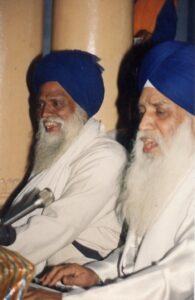
Bhai Balbir Singh was born in 1933 in Tarn Taran, Punjab, into a family of Gurmat Sangeet exponents whose lineage stretches back seven generations to the time of Guru Arjan Dev Ji. According to his own recollections, his ancestor Sri Ram Ji was among the Sikhs who first performed Kirtan when the Rababis did not show up for Kirtan at Sri Harmandir Sahib during Guru Arjan Dev Ji’s time. The next in line was Sri Hari Ji, followed by his son, Bhai Hira Singh, who took Amrit from Guru Gobind Singh Ji. The tradition continued through Bhai Inder Singh (fourth generation), Bhai Kundan Singh (fifth), and Bhai Santa Singh (sixth). Bhai Balbir Singh represents the seventh generation of this uninterrupted heritage of Gurbani Kirtan. His father, Bhai Santa Singh, was a highly respected tabla and pakhawaj player and a teacher at the Gurmat Vidyalaya, Tarn Taran. His father’s elder brother Bhai Sohan Singh served as the main Ragi, while the younger brother Bhai Tara Singh accompanied on harmonium, and Bhai Santa Singh played the pakhawaj or tabla. The three brothers regularly performed Kirtan at Sri Darbar Sahib, Tarn Taran, and also taught students from far and wide.
As a child, Bhai Balbir Singh often sat quietly beside his father during teaching sessions, absorbing knowledge as they were taught to students. When his father later invited him to begin lessons, the young Balbir Singh surprised him by reciting a complete Shabad he had already learned by ear. This moment marked the beginning of his formal education in Gurbani Kirtan under his father and uncles. Around that time, the renowned Pandit Nathu Ram, a Dhrupad exponent, was also based in Tarn Taran, and Bhai Balbir Singh trained under him. Recalling his influence, Bhai Balbir Singh once said he had never heard Dhrupad sung with such depth since. Over the years, he was also fortunate to study under the legendary Ustad Bhai Arjan Singh Tarangar, Pandit Krishnarao Pandit (Khayal), Ustad Habibuddin Khan (Tabla) and Gyani Gyan Singh Almast (Jal-Tarang). He was also a skilled Dilruba player, having studied the instrument under his father’s tutelage.
When Bhai Balbir Singh was only seven years old, he accompanied his uncle to Indore, where a Kirtan competition for teenagers was being held at Sri Guru Singh Sabha, Indore. Although the other contestants were around fifteen, the young Balbir Singh participated and won the gold medal. His father also instructed him to memorise Shabads and Asa Ki Vaar, which he initially struggled with. Following his father’s advice to do Ardas for Guru Ji’s blessing to memorise these, he persevered, taking eleven years to fully memorise Asa Ki Vaar. Over the years, his dedication led him to memorize over 3,000 Shabads and to master around 200 Raags. He was known for performing in complex taals such as Dhamar and Ada Chautaal. He was also a master of Guru Gobind Singh Ji’s compositions from the Dasam Granth and Sarbloh Granth, and especially loved performing Taranas attributed to Guru Gobind Singh Ji.
Accompanying his father to music conferences held in various cities across India including Benaras, Lucknow, Gwalior, Pune, Calcutta, and Delhi, he gained exposure to some of the most esteemed names in Indian classical music. His father also took him to the homes of iconic artists like Pandit Krishnarao Pandit and Bhai Lal Mohammad Amritsari, receiving their blessings and invaluable musical insight.
In 1950, he spent two years in Kolkata, where he had the rare privilege of learning from Ustad Bade Ghulam Ali Khan Sahib, one of India’s greatest classical vocalists. This exposure refined his command over Raag and taal, giving his Gurbani renditions an unmatched classical foundation. During an early visit to Takhat Sri Hazoor Sahib with his father, Bhai Balbir Singh’s Kirtan deeply impressed the head pujari, Bahadar Singh, who suggested that Bhai Santa Singh make him the Jathedar of the Jatha. Blessings were bestowed upon him, and he led the Jatha in Kirtan for seven days at Hazoor Sahib. At the age of 21, Bhai Balbir Singh formed a permanent Jatha with his brothers, Bhai Chattar Singh on side harmonium and Bhai Mahinder Singh on Jori. They began serving as Hazoori Ragis at Sri Darbar Sahib, Tarn Taran. In 1964, the jatha was invited to Sri Harmandir Sahib, Amritsar, where they began performing as Hazoori Ragis. Their devotion, mastery of Raags and difficult compositions earned them immense love from the Sangat. In 1977, the Sangat of Delhi requested their presence, and they moved to serve at Gurdwara Sri Sis Ganj Sahib. They remained there until 1984, when the tragic events surrounding Operation Bluestar compelled them to return to Amritsar, resuming their duties at Sri Harmandir Sahib.
Bhai Balbir Singh released his first vinyl record in 1974 through a Kolkata-based recording company (believed to be Madan Machinery). He made his first radio and television appearance in 1987 on Akashvani (All India Radio). Over the decades, he recorded numerous albums and live sessions, preserving a treasure of Raag-based Kirtan for future generations. He trained many students, including his sons Bhai Bahadar Singh and Bhai Saudagar Singh, ensuring the continuation of this ancient lineage.
For his lifelong contribution to Gurmat Sangeet and the preservation of traditional Raag-based Kirtan, Bhai Balbir Singh received the Sangeet Natak Akademi Award in 2012, the first Hazoori Ragi from Sri Harmandir Sahib to be so honoured. He was also conferred the Shiromani Ragi Award (1983) and many distinctions from Sikh institutions in India and abroad.
Bhai Balbir Singh often mentioned his admiration for Raagis such as Sant Sujan Singh, Bhai Samund Singh, Bhai Santa Singh, Bhai Surjan Singh, Bhai Bakshish Singh, and Bhai Prithipal Singh, whose Kirtan deeply inspired him.
Bhai Balbir Singh passed away on 23 February 2020. He leaves behind a vast archive of recordings and a generation of trained disciples that continue serve the Sikh Panth around the world.
Recordings
298 tracks
Recordings
Recordings
The following Asa Ki Vaar is from an AKJ Samagam.
The following Asa Ki Vaar is from an AKJ Samagam.
Vol. 1 – Kirtan in 2007
The four cassettes below were kindly contributed by Dr. Manjit Singh Hunjin, who is a very talented artist. Please check out his Instagram page ‘AmsimeetArt’. Vol. 1 – Kirtan in 2007
Vol. 1 – Kirtan in 2007
The four cassettes below were kindly contributed by Dr. Manjit Singh Hunjin, who is a very talented artist. Please check out his Instagram page ‘AmsimeetArt’. Vol. 1 – Kirtan in 2007
Vol. 3
Vol. 3
Vol. 4 – Raag Darbar Amritsar 2002
Vol. 4 – Raag Darbar Amritsar 2002
Vol. 1 – Anand Kaaraj Program
The next four cassettes were kindly contributed by Veer Ikaagarjot Singh. Vol. 1 – Anand Kaaraj Program
Vol. 1 – Anand Kaaraj Program
The next four cassettes were kindly contributed by Veer Ikaagarjot Singh. Vol. 1 – Anand Kaaraj Program
Vol. 2 – Asa Ki Vaar (Incomplete)
Vol. 2 – Asa Ki Vaar (Incomplete)
Vol. 3 – Shabads
Vol. 3 – Shabads
Vol. 4 – Kirtan in Kolkata (with Keyboard)
Vol. 4 – Kirtan in Kolkata (with Keyboard)
Recordings
The following recordings are from Bhai Sahib’s Kirtan at the Adutti Gurmat Sangeet Samelan held annually at Jawaddi Kalan.
Recordings
The following recordings are from Bhai Sahib’s Kirtan at the Adutti Gurmat Sangeet Samelan held annually at Jawaddi Kalan.
1991
The Asa Ki Vaar below was recorded at the Adutti Gurmat Sangeet Samelan (AGSS) in 1991.
1991
The Asa Ki Vaar below was recorded at the Adutti Gurmat Sangeet Samelan (AGSS) in 1991.
Bachitar Natak Kirtan
Bachitar Natak Kirtan
Kirtan on 15th July 1990
The following recordings were recorded at Dera Hari Bhagatpura, Mitha Tiwana Kirtan on 15th July 1990
Kirtan on 15th July 1990
The following recordings were recorded at Dera Hari Bhagatpura, Mitha Tiwana Kirtan on 15th July 1990
Kirtan on 21st February 1991
Kirtan on 21st February 1991
Kirtan on 22nd February 1991
Kirtan on 22nd February 1991
Kirtan on 14th March 1991
Kirtan on 14th March 1991
Kirtan on 14th April 1991
Kirtan on 14th April 1991
Kirtan on 15th April 1991
Kirtan on 15th April 1991
Kirtan on 16th July 1991
Kirtan on 16th July 1991
Recordings
The following live recordings are from the ‘Gurmat Sangeet Project’ website.
Recordings
The following live recordings are from the ‘Gurmat Sangeet Project’ website.
Shabads from the album ‘Har Jiyo Naam Paryo Raam Das’
Shabads from the album ‘Har Jiyo Naam Paryo Raam Das’
Shabads from the album ‘Sant Jana Mil Har Jas Gaayo’
Shabads from the album ‘Sant Jana Mil Har Jas Gaayo’
Shabads from the album ‘Apne Karam Ki Gat Main Kya Janu’
Shabads from the album ‘Apne Karam Ki Gat Main Kya Janu’
Shabads from the album ‘Man Kahan Bisariyo Raam Naam’
Shabads from the album ‘Man Kahan Bisariyo Raam Naam’
Shabads from the album ‘Gun Naad Dhun Anand Baid’
Shabads from the album ‘Gun Naad Dhun Anand Baid’
Shabads from the album ‘Nanak Tinah Basant Hai’
Shabads from the album ‘Nanak Tinah Basant Hai’
Shabads from the album ‘Chandi Di Vaar’
Shabads from the album ‘Chandi Di Vaar’
Shabads from the album ‘Tuhin Sardara’
Shabads from the album ‘Tuhin Sardara’
Shabads from the album ‘Maate Matang Jare Jar Sang’
Shabads from the album ‘Maate Matang Jare Jar Sang’
Shabads from the album ‘Jhagardang Nagardang’
Shabads from the album ‘Jhagardang Nagardang’
Shabads from the album ‘Jaagat Jot Japei Nis Baasar’
Shabads from the album ‘Jaagat Jot Japei Nis Baasar’
Shabads from the album ‘Deenan Ki Pratpaal Karei’
Shabads from the album ‘Deenan Ki Pratpaal Karei’
Shabads from the album ‘Ab Main Apni Katha Bakhano’
Shabads from the album ‘Ab Main Apni Katha Bakhano’
Vol. 1
Shabads from the album ‘Dhann Dhann Karoh’ Vol. 1
Vol. 1
Shabads from the album ‘Dhann Dhann Karoh’ Vol. 1
Vol. 2
Vol. 2
Vol. 1
Shabads from the collection ‘Ratana Keri Guthali’ (Partaal Shabad Gayaki). Vol. 1
Vol. 1
Shabads from the collection ‘Ratana Keri Guthali’ (Partaal Shabad Gayaki). Vol. 1
Vol. 2
Vol. 2
Vol. 3
Vol. 3
Vol. 4
Vol. 4
Vol. 5
Vol. 5
Vol. 6
Vol. 6
Vol. 7
Vol. 7
Vol. 8
Vol. 8
Vol. 9
Vol. 9
Vol. 10
Vol. 10
Vol. 11
Vol. 11
Vol. 12
Vol. 12
Vol. 13
Vol. 13
Vol. 14
Vol. 14
Vol. 1
Shabads from the collection ‘Dhan So Raag Sorangreh’ Vol. 1
Vol. 1
Shabads from the collection ‘Dhan So Raag Sorangreh’ Vol. 1
Vol. 2
Vol. 2
Vol. 3
Vol. 3
Vol. 4
Vol. 4
Vol. 5
Vol. 5
Vol. 7
Vol. 7
Page comments
No page comments yet.
Comments 0
No comments on this recording yet.
No comments on this recording yet.
No comments on this recording yet.
No comments on this recording yet.
No comments on this recording yet.
No comments on this recording yet.
No comments on this recording yet.
No comments on this recording yet.
No comments on this recording yet.
No comments on this recording yet.
No comments on this recording yet.
No comments on this recording yet.
No comments on this recording yet.
No comments on this recording yet.
No comments on this recording yet.
No comments on this recording yet.
No comments on this recording yet.
No comments on this recording yet.
No comments on this recording yet.
No comments on this recording yet.
No comments on this recording yet.
No comments on this recording yet.
No comments on this recording yet.
No comments on this recording yet.
No comments on this recording yet.
No comments on this recording yet.
No comments on this recording yet.
No comments on this recording yet.
No comments on this recording yet.
No comments on this recording yet.
No comments on this recording yet.
No comments on this recording yet.
No comments on this recording yet.
No comments on this recording yet.
No comments on this recording yet.
No comments on this recording yet.
No comments on this recording yet.
No comments on this recording yet.
No comments on this recording yet.
No comments on this recording yet.
No comments on this recording yet.
No comments on this recording yet.
No comments on this recording yet.
No comments on this recording yet.
No comments on this recording yet.
No comments on this recording yet.
No comments on this recording yet.
No comments on this recording yet.
No comments on this recording yet.
No comments on this recording yet.
No comments on this recording yet.
No comments on this recording yet.
No comments on this recording yet.
No comments on this recording yet.
No comments on this recording yet.
No comments on this recording yet.
No comments on this recording yet.
No comments on this recording yet.
No comments on this recording yet.
No comments on this recording yet.
No comments on this recording yet.
No comments on this recording yet.
No comments on this recording yet.
No comments on this recording yet.
No comments on this recording yet.
No comments on this recording yet.
No comments on this recording yet.
No comments on this recording yet.
No comments on this recording yet.
No comments on this recording yet.
No comments on this recording yet.
No comments on this recording yet.
No comments on this recording yet.
No comments on this recording yet.
No comments on this recording yet.
No comments on this recording yet.
No comments on this recording yet.
No comments on this recording yet.
No comments on this recording yet.
No comments on this recording yet.
No comments on this recording yet.
No comments on this recording yet.
No comments on this recording yet.
No comments on this recording yet.
No comments on this recording yet.
No comments on this recording yet.
No comments on this recording yet.
No comments on this recording yet.
No comments on this recording yet.
No comments on this recording yet.
No comments on this recording yet.
No comments on this recording yet.
No comments on this recording yet.
No comments on this recording yet.
No comments on this recording yet.
No comments on this recording yet.
No comments on this recording yet.
No comments on this recording yet.
No comments on this recording yet.
No comments on this recording yet.
No comments on this recording yet.
No comments on this recording yet.
No comments on this recording yet.
No comments on this recording yet.
No comments on this recording yet.
No comments on this recording yet.
No comments on this recording yet.
No comments on this recording yet.
No comments on this recording yet.
No comments on this recording yet.
No comments on this recording yet.
No comments on this recording yet.
No comments on this recording yet.
No comments on this recording yet.
No comments on this recording yet.
No comments on this recording yet.
No comments on this recording yet.
No comments on this recording yet.
No comments on this recording yet.
No comments on this recording yet.
No comments on this recording yet.
No comments on this recording yet.
No comments on this recording yet.
No comments on this recording yet.
No comments on this recording yet.
No comments on this recording yet.
No comments on this recording yet.
No comments on this recording yet.
No comments on this recording yet.
No comments on this recording yet.
No comments on this recording yet.
No comments on this recording yet.
No comments on this recording yet.
No comments on this recording yet.
No comments on this recording yet.
No comments on this recording yet.
No comments on this recording yet.
No comments on this recording yet.
No comments on this recording yet.
No comments on this recording yet.
No comments on this recording yet.
No comments on this recording yet.
No comments on this recording yet.
No comments on this recording yet.
No comments on this recording yet.
No comments on this recording yet.
No comments on this recording yet.
No comments on this recording yet.
No comments on this recording yet.
No comments on this recording yet.
No comments on this recording yet.
No comments on this recording yet.
No comments on this recording yet.
No comments on this recording yet.
No comments on this recording yet.
No comments on this recording yet.
No comments on this recording yet.
No comments on this recording yet.
No comments on this recording yet.
No comments on this recording yet.
No comments on this recording yet.
No comments on this recording yet.
No comments on this recording yet.
No comments on this recording yet.
No comments on this recording yet.
No comments on this recording yet.
No comments on this recording yet.
No comments on this recording yet.
No comments on this recording yet.
No comments on this recording yet.
No comments on this recording yet.
No comments on this recording yet.
No comments on this recording yet.
No comments on this recording yet.
No comments on this recording yet.
No comments on this recording yet.
No comments on this recording yet.
No comments on this recording yet.
No comments on this recording yet.
No comments on this recording yet.
No comments on this recording yet.
No comments on this recording yet.
No comments on this recording yet.
No comments on this recording yet.
No comments on this recording yet.
No comments on this recording yet.
No comments on this recording yet.
No comments on this recording yet.
No comments on this recording yet.
No comments on this recording yet.
No comments on this recording yet.
No comments on this recording yet.
No comments on this recording yet.
No comments on this recording yet.
No comments on this recording yet.
No comments on this recording yet.
No comments on this recording yet.
No comments on this recording yet.
No comments on this recording yet.
No comments on this recording yet.
No comments on this recording yet.
No comments on this recording yet.
No comments on this recording yet.
No comments on this recording yet.
No comments on this recording yet.
No comments on this recording yet.
No comments on this recording yet.
No comments on this recording yet.
No comments on this recording yet.
No comments on this recording yet.
No comments on this recording yet.
No comments on this recording yet.
No comments on this recording yet.
No comments on this recording yet.
No comments on this recording yet.
No comments on this recording yet.
No comments on this recording yet.
No comments on this recording yet.
No comments on this recording yet.
No comments on this recording yet.
No comments on this recording yet.
No comments on this recording yet.
No comments on this recording yet.
No comments on this recording yet.
No comments on this recording yet.
No comments on this recording yet.
No comments on this recording yet.
No comments on this recording yet.
No comments on this recording yet.
No comments on this recording yet.
No comments on this recording yet.
No comments on this recording yet.
No comments on this recording yet.
No comments on this recording yet.
No comments on this recording yet.
No comments on this recording yet.
No comments on this recording yet.
No comments on this recording yet.
No comments on this recording yet.
No comments on this recording yet.
No comments on this recording yet.
No comments on this recording yet.
No comments on this recording yet.
No comments on this recording yet.
No comments on this recording yet.
No comments on this recording yet.
No comments on this recording yet.
No comments on this recording yet.
No comments on this recording yet.
No comments on this recording yet.
No comments on this recording yet.
No comments on this recording yet.
No comments on this recording yet.
No comments on this recording yet.
No comments on this recording yet.
No comments on this recording yet.
No comments on this recording yet.
No comments on this recording yet.
No comments on this recording yet.
No comments on this recording yet.
No comments on this recording yet.
No comments on this recording yet.
No comments on this recording yet.
No comments on this recording yet.
No comments on this recording yet.
No comments on this recording yet.
No comments on this recording yet.
No comments on this recording yet.
No comments on this recording yet.
No comments on this recording yet.
No comments on this recording yet.
No comments on this recording yet.
No comments on this recording yet.
No comments on this recording yet.
No comments on this recording yet.
No comments on this recording yet.
No comments on this recording yet.
No comments on this recording yet.
No comments on this recording yet.
No comments on this recording yet.
No comments on this recording yet.
No comments on this recording yet.
No comments on this recording yet.
No comments on this recording yet.
No comments on this recording yet.
No comments on this recording yet.
No comments on this recording yet.
No comments on this recording yet.
No comments on this recording yet.
No comments on this recording yet.
No comments on this recording yet.
No comments on this recording yet.
No comments on this recording yet.
No comments on this recording yet.
No comments on this recording yet.
No comments on this recording yet.
No comments on this recording yet.
No comments on this recording yet.